
[20260409] Choosing the Right Fit for Firefighting Gear: Why Size Matters | KANOX® Fire Safety Fabrics: Durable and Certified Fire-Resistant Solutions
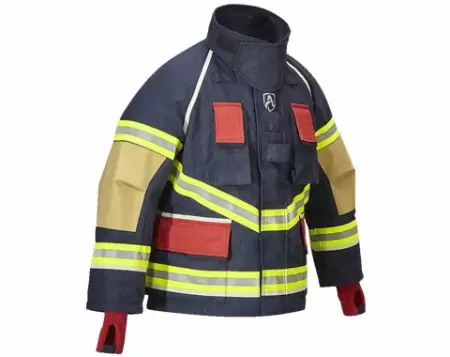
When it comes to firefighting gear, being able to wear it is not the same as wearing it correctly. Proper sizing is not just about comfort — it is a critical factor that directly affects protection and safety in extreme environments.◁ The Hidden Role of the Air Gap ▷One of the most important yet often overlooked elements of thermal protection is the air gap between the garment and the body. This layer of trapped air acts as an insulating barrier, helping to slow down heat transfer.⚠️ Too tight: If the suit is too small, the air layer becomes too thin. Heat can transfer more quickly through the garment to the skin, increasing the risk of burns. ⚠️ Too loose: If the suit is too large, the air layer may become unstable, allowing air circulation (convection) inside the garment. This reduces insulation efficiency, while also adding unnecessary bulk and restricting movement.In a fire scene, only a properly fitted suit can provide optimal protection. So how do you choose the right size? ✏︎✏︎✏︎✏︎✏︎✏︎✏︎✏︎✏︎✏︎✏︎✏︎✏︎✏︎✏︎✏︎✏︎✏︎✏︎✏︎◁ Three Key Checks When Trying on Firefighting Gear ▷1. Overlap Protection: Raise and Move Start by raising both arms overhead. This simple motion helps confirm that the overlap between the jacket hem and the trousers remains at least 5 cm or more. Next, perform a range of movements: 1️⃣ Bend forward, backward, and side to side 2️⃣ Lean forward with arms extendedThese actions simulate real fireground conditions and ensure there are no gaps where heat, flames, or hot gases could penetrate.2. Sleeve and Glove Integration Proper integration between sleeves and gloves is essential to prevent skin exposure. 1️⃣ Use the thumb loop at the cuff to secure the sleeve in place before putting on gloves. This prevents the sleeve from riding down. 2️⃣ Be aware of glove types: ✔️ Short gloves: The glove cuff should be covered by the jacket sleeve cuff ✔️ Long gloves: The glove cuff should cover the jacket sleeve cuffAfter putting on gloves, perform gripping or climbing motions to ensure the sleeve and glove maintain proper overlap at all times.3. Mobility Testing: Move Like You Mean It Firefighters never stand still in real situations. Wear the full set of equipment and perform these functional tests: ✔️ Deep squat: Check if the crotch area is too tight, whether the knees have enough flexibility, and if the pant legs ride up excessively. ✔️ Crawling: Evaluate overall mobility and confirm that sleeve cuffs and pant legs remain adequately positioned during movement. ✏︎✏︎✏︎✏︎✏︎✏︎✏︎✏︎✏︎✏︎✏︎✏︎✏︎✏︎✏︎✏︎✏︎✏︎✏︎✏︎◁ The Critical Detail: Always Test with Fire Boots ▷A common mistake when trying on firefighting trousers is wearing casual shoes — or even going barefoot. This leads to inaccurate sizing and can create dangerous exposure gaps during actual operations. Golden Rules for Trying on Firefighting Trousers: 📌 Always wear firefighting boots during fitting 📌 Perform movement tests (such as squatting or stepping) to ensure proper overlap between trousers and boots 📌 There is no fixed overlap length—dynamic testing is essential 📌 The trouser hem should fall around the ankle area, avoiding excessive length that could cause tripping hazards ✏︎✏︎✏︎✏︎✏︎✏︎✏︎✏︎✏︎✏︎✏︎✏︎✏︎✏︎✏︎✏︎✏︎✏︎✏︎✏︎🧑🚒 Fit for Function, Not for Appearance 👨🚒When trying on firefighting gear, it is strongly recommended to test with your standard operational equipment. This provides a more realistic assessment of fit and performance. Most importantly, rely on dynamic movement tests, not just standing measurements. Firefighting is physically demanding, and your gear must perform under real conditions. Firefighting gear is not designed to look good — it is designed to protect your life. Choosing the right size ensures that your gear works with you, not against you —delivering the protection, mobility, and confidence you need when it matters most. KANOX® FR Fabrics / SUPER ARMOR® Turnout Gears is an ISO 9001, NFPA, and EN certified fire fighting garment, protective clothing, fire retardant fabric, fire resistant clothing, flame retardant fabric, fire retardant clothing manufacturer from Taiwan since 1976. Founded in 1976 and based in Taiwan, KANOX® is a global leader in fire-resistant fabrics and protective clothing. Renowned for innovation and durability, KANOX® offers a wide range of certified fire-retardant solutions meeting international standards like ISO 9001, NFPA, and EN. Our advanced technology and over 40 years of expertise ensure top-quality products designed to safeguard lives in the most hazardous environments. Trusted worldwide, KANOX® sets the benchmark for excellence in fire safety.
[20260409] Choosing the Right Fit for Firefighting Gear: Why Size Matters
When it comes to firefighting gear, being able to wear it is not the same as wearing it correctly. Proper sizing is not just about comfort — it is a critical factor that directly affects protection and safety in extreme environments.
◁ The Hidden Role of the Air Gap ▷
One of the most important yet often overlooked elements of thermal protection is the air gap between the garment and the body. This layer of trapped air acts as an insulating barrier, helping to slow down heat transfer.
⚠️ Too tight:
If the suit is too small, the air layer becomes too thin. Heat can transfer more quickly through the garment to the skin, increasing the risk of burns.
⚠️ Too loose:
If the suit is too large, the air layer may become unstable, allowing air circulation (convection) inside the garment. This reduces insulation efficiency,
while also adding unnecessary bulk and restricting movement.
In a fire scene, only a properly fitted suit can provide optimal protection. So how do you choose the right size?
✏︎✏︎✏︎✏︎✏︎✏︎✏︎✏︎✏︎✏︎✏︎✏︎✏︎✏︎✏︎✏︎✏︎✏︎✏︎✏︎
◁ Three Key Checks When Trying on Firefighting Gear ▷
1. Overlap Protection: Raise and Move
Start by raising both arms overhead. This simple motion helps confirm that the overlap between the jacket hem and the trousers remains at least 5 cm or
more.
Next, perform a range of movements:
1️⃣ Bend forward, backward, and side to side
2️⃣ Lean forward with arms extended
These actions simulate real fireground conditions and ensure there are no gaps where heat, flames, or hot gases could penetrate.
2. Sleeve and Glove Integration
Proper integration between sleeves and gloves is essential to prevent skin exposure.
1️⃣ Use the thumb loop at the cuff to secure the sleeve in place before putting on gloves. This prevents the sleeve from riding down.
2️⃣ Be aware of glove types:
✔️ Short gloves: The glove cuff should be covered by the jacket sleeve cuff
✔️ Long gloves: The glove cuff should cover the jacket sleeve cuff
After putting on gloves, perform gripping or climbing motions to ensure the sleeve and glove maintain proper overlap at all times.
3. Mobility Testing: Move Like You Mean It
Firefighters never stand still in real situations. Wear the full set of equipment and perform these functional tests:
✔️ Deep squat: Check if the crotch area is too tight, whether the knees have enough flexibility, and if the pant legs ride up excessively.
✔️ Crawling: Evaluate overall mobility and confirm that sleeve cuffs and pant legs remain adequately positioned during movement.
✏︎✏︎✏︎✏︎✏︎✏︎✏︎✏︎✏︎✏︎✏︎✏︎✏︎✏︎✏︎✏︎✏︎✏︎✏︎✏︎
◁ The Critical Detail: Always Test with Fire Boots ▷
A common mistake when trying on firefighting trousers is wearing casual shoes — or even going barefoot. This leads to inaccurate sizing and can create dangerous exposure gaps during actual operations.
Golden Rules for Trying on Firefighting Trousers:
📌 Always wear firefighting boots during fitting
📌 Perform movement tests (such as squatting or stepping) to ensure proper overlap between trousers and boots
📌 There is no fixed overlap length—dynamic testing is essential
📌 The trouser hem should fall around the ankle area, avoiding excessive length that could cause tripping hazards
✏︎✏︎✏︎✏︎✏︎✏︎✏︎✏︎✏︎✏︎✏︎✏︎✏︎✏︎✏︎✏︎✏︎✏︎✏︎✏︎
🧑🚒 Fit for Function, Not for Appearance 👨🚒
When trying on firefighting gear, it is strongly recommended to test with your standard operational equipment. This provides a more realistic assessment of fit and performance.
Most importantly, rely on dynamic movement tests, not just standing measurements. Firefighting is physically demanding, and your gear must perform under real conditions.
Firefighting gear is not designed to look good — it is designed to protect your life.
Choosing the right size ensures that your gear works with you, not against you —delivering the protection, mobility, and confidence you need when it matters most.
To be a global performance leader for firefighting suits and inherently fire resistant fabrics.

[20260409] Choosing the Right Fit for Firefighting Gear: Why Size Matters | Explore KANOX® Fire Safety Apparel: Advanced Fire-Resistant Clothing
Established in 1976, Taiwan K.K. Corporation is headquartered in Taiwan and excels in developing and producing top-tier fire retardant fabrics. Our flagship products, the KANOX® and GORNOX series, are highly esteemed for their superior protection and durability in industrial and safety applications. Committed to innovation and stringent quality standards, KANOX® delivers reliable fire-resistant materials that meet the rigorous demands of various industries, ensuring maximum safety and performance through state-of-the-art manufacturing and comprehensive quality control processes.
KANOX® products are engineered for exceptional durability, enduring the toughest conditions while ensuring optimal performance. Our fire retardant fabrics meet and exceed international safety standards, holding certifications such as ISO 9001, NFPA, and EN. This rigorous certification process guarantees that our fabrics provide reliable, long-lasting protection in critical applications. Our commitment to quality and adherence to stringent certification standards highlight KANOX® as a global leader in fire-resistant materials, trusted for safety and reliability.
With over 48 years of experience and advanced technology, KANOX® FR Fabrics / SUPER ARMOR® Turnout Gears offers top-quality protective fire-resistant clothing for firefighters, ensuring each customer's needs are met.